Introduction
Cheddar Gorge is famous for its towering cliffs, dramatic scenery, and rich cheese-making history. But some of its greatest wonders are hidden from view.
Carved deep into the limestone over hundreds of thousands of years, the caves of Cheddar Gorge have fascinated explorers, archaeologists, and curious visitors for generations. Some are open to the public. Others remain mysterious, difficult to access, or only partly understood.
So what exactly lies inside the hidden caves of Cheddar Gorge?
How the Caves Were Formed
The caves of Cheddar Gorge were created naturally over a very long period of time. Rainwater, slightly acidic from the atmosphere and soil, slowly dissolved the limestone rock, carving out tunnels, chambers, and underground passages.
Over time, these spaces grew into the remarkable cave systems we know today.
This process did not happen quickly. The caves were shaped over thousands upon thousands of years, with water constantly cutting, dripping, and reshaping the rock beneath the surface.
That is why the caves feel so ancient because they are.
Goughs Cave
The most famous cave in Cheddar Gorge is Goughs Cave, discovered in the 19th century and now one of the areas best-known attractions.
Inside, visitors can find:
Impressive rock formations
Underground chambers
Ancient remains
Evidence of prehistoric life
Goughs Cave is also the site where the Cheddar Man was discovered, linking it directly to one of Britains most important archaeological finds.
Its winding pathways, strange shapes, and shifting light make it easy to see why the cave has inspired so many stories over the years.
Coxs Cave and Crystal Formations
Another popular cave in the gorge is Coxs Cave, known for its beautiful formations and dramatic lighting. Compared with Goughs Cave, Coxs Cave feels more decorative and otherworldly. Stalactites and stalagmites create unusual shapes that almost seem designed rather than formed by nature.
Visitors often describe these spaces as magical, especially when light catches the mineral surfaces and reveals the details hidden in the rock. It is a reminder that caves are not just dark holes in the ground. They are places of texture, colour, and atmosphere.
What Else Has Been Found Inside?
The caves of Cheddar Gorge have revealed much more than impressive scenery.
Over the years, discoveries have included:
Prehistoric human remains
Animal bones
Ancient tools
Signs of long-term human activity
These findings suggest that the caves were not merely temporary shelters. They were places where people lived, hid, stored food, and survived.
In later centuries, the caves also became useful for another reason: cheese.
Their naturally cool and stable conditions made them ideal for storing and maturing Cheddar, helping to shape the regions food history as well as its human history.
Why Caves Feel So Mysterious
Even when fully mapped and explored, caves retain a sense of mystery.
Part of that comes from the darkness. Part comes from the silence. And part comes from the way sound, light, and distance behave differently underground.
A cave can make a small space feel endless. A simple echo can sound like movement. A familiar path can suddenly feel strange when the shadows change.
That is one reason caves appear so often in myths and legends. They are real places, but they never feel entirely ordinary.
Are There Still Hidden Caves?
Although the main attractions of Cheddar Gorge are well documented, not every opening, passage, or chamber has become part of the tourist trail.
Some cave spaces are inaccessible, unsafe, or simply not open to the public. Others may connect to deeper systems that are only explored by specialists.
So yes in a sense, there are still hidden caves in Cheddar Gorge.
Not necessarily undiscovered in the dramatic sense, but hidden enough that most visitors will never see them.
And perhaps that is part of their appeal.
A Curious Local Thought
When people imagine the caves of Cheddar Gorge, they usually think of geology, archaeology, or cheese.
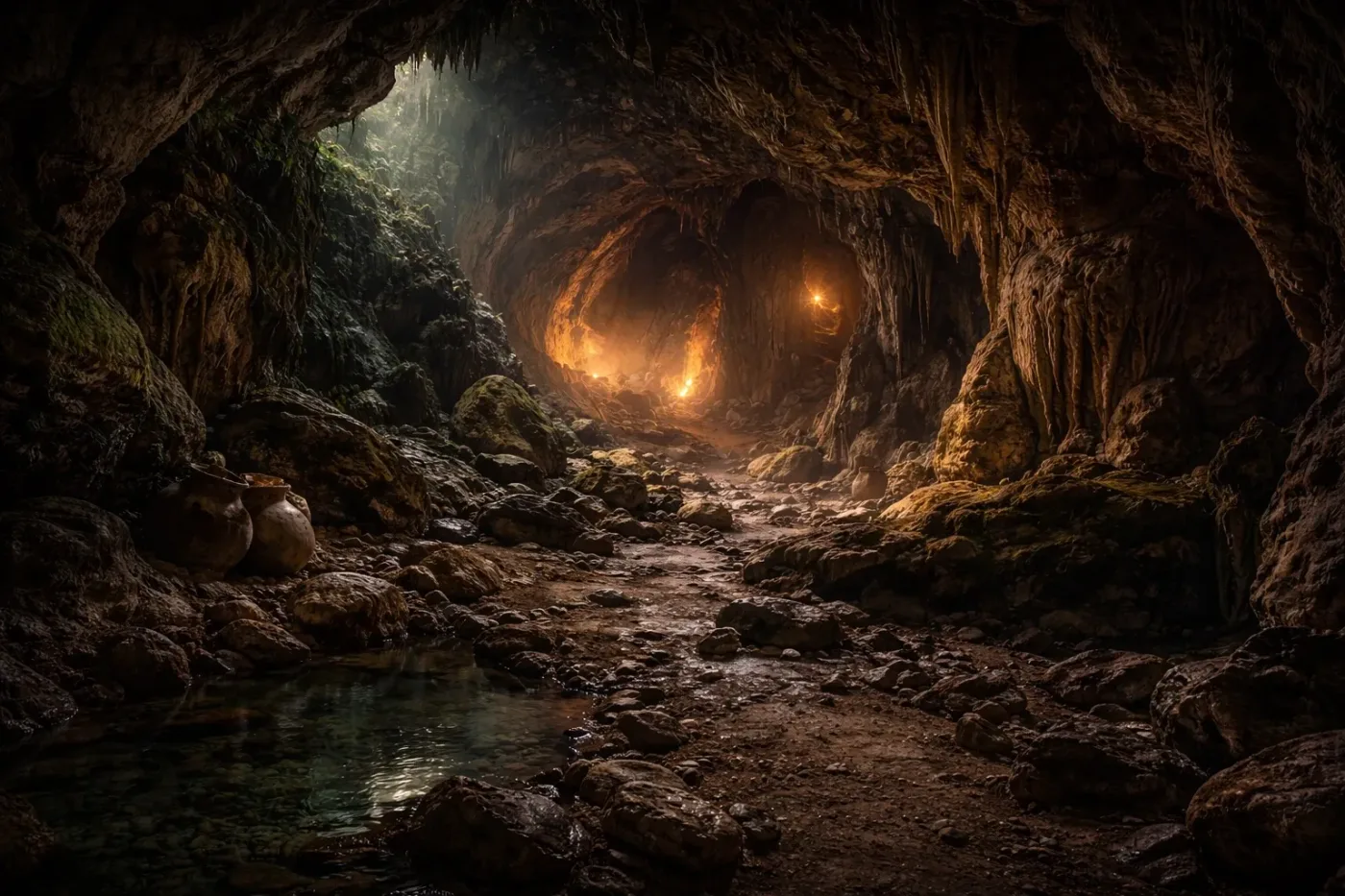
They do not usually think of glowing tunnels, strange footprints, or secret worlds hidden behind the rock.
Probably for the best.
Still, when you stand at the mouth of a cave and look into the darkness, it is hard not to wonder what else might be down there.
Conclusion
The hidden caves of Cheddar Gorge are part of what makes the landscape so fascinating. They are ancient, beautiful, and full of history from prehistoric people to cave-aged cheese.
But beyond the facts and formations, they also hold something less easy to explain: atmosphere.
They invite questions. They suggest stories. And once you have seen them, it is very hard not to imagine that the gorge may still be hiding a few secrets of its own.